There are moments in history when everything familiar seems to disappear overnight. Homes become memories. Daily routines are replaced by survival. The future feels uncertain, and every new day begins with a question rather than a plan. Yet even in the darkest chapters of human history, one thing has always found a way to endure. Humanity.
When people think about war, they often picture destruction, loss, and heartbreak. What we do not always see are the quiet acts of kindness that happen behind the headlines. The shared meals, the comforting words, the helping hands, and the determination to keep going together.
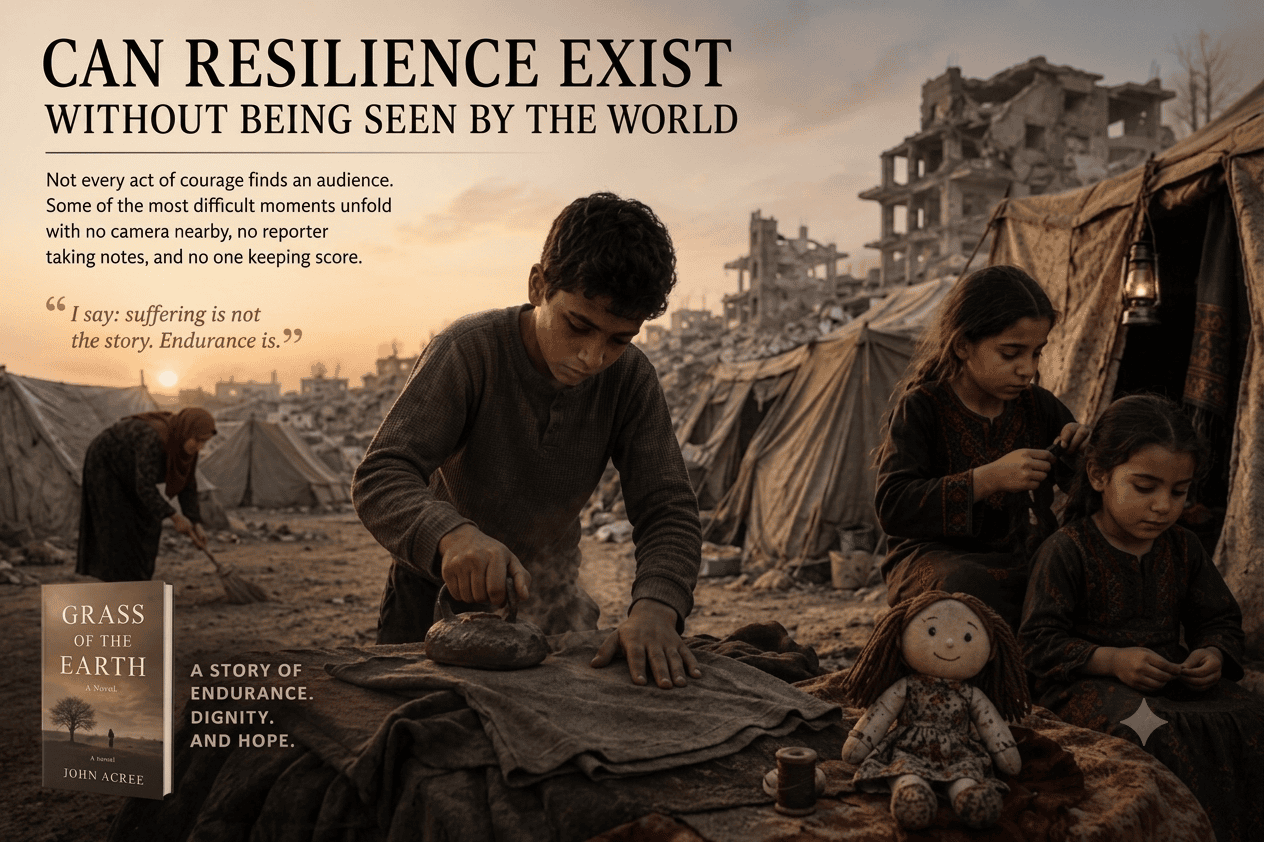
Grass of the Earth takes readers beyond the news and into the deeply personal experience of life in Gaza. Through the voices of ordinary people, the book reminds us that even when everything seems lost, hope often survives because people choose to stand beside one another.
Humanity Lives Through One Another
When disaster strikes, survival is rarely an individual effort. It becomes something shared. Families make sacrifices for one another. Neighbors become protectors. Strangers become friends.
Throughout Grass of the Earth, we witness how communities continue to function even as normal life disappears. People share limited food, comfort frightened children, and offer shelter despite having almost nothing themselves. These are not extraordinary heroes. They are ordinary people choosing compassion when fear could easily take over.
The book reminds us that humanity is often measured not by what we have but by what we are willing to give when someone else needs it most.
John Acree is an award-winning novelist, veteran journalist, and world traveler whose writing bridges suspense, historical truth, and deep spiritual questions.
Strength Found in Shared Struggle
It is impossible to speak about war and resilience without recognizing the emotional strength required simply to keep moving forward.
The people in Grass of the Earth are forced to face unimaginable loss, yet they continue caring for their children, supporting their parents, preserving memories, and finding reasons to hope for tomorrow. Even when homes disappear and daily life collapses, they refuse to let despair define who they are.
Their resilience is not about pretending everything is fine. It is about choosing life despite overwhelming hardship. That quiet determination becomes one of the most powerful messages in the book.
More importantly, the story shows how resilience grows stronger when it is shared. People survive because they lean on one another. They find strength in collective courage and in the belief that no one should carry suffering alone.
The Stories Behind the Headlines
Discussions about the war in Palestine often focus on politics, military strategy, or statistics. Those conversations are important, but numbers alone cannot explain what people actually experience.
Grass of the Earth brings readers into the everyday reality of life in Gaza, where parents try to comfort hungry children, families search for safety, and neighbors work together to rebuild some sense of normalcy in impossible circumstances. The book reminds us that behind every headline is a person with dreams, relationships, and memories worth protecting.
By focusing on lived experiences rather than distant events, the story invites readers to respond with empathy instead of indifference. It challenges us to look beyond the conflict and remember the people living through it.

Discover a Story That Refuses to Be Forgotten
Some books entertain us. Others stay with us because they remind us what it means to be human.
If you want to understand humanity, war and resilience, life in Gaza, and the personal experiences behind the war in Palestine, Grass of the Earth offers a moving perspective that encourages reflection, compassion, and hope.
When Hope Becomes an Act of Courage
When everything falls apart, buildings can be rebuilt and cities can recover. The greater challenge is protecting compassion, kindness, and our willingness to care for one another.
Grass of the Earth shows that while war can take away homes, security, and certainty, it cannot easily erase the human spirit. As long as people continue to help one another, remember each other’s stories, and believe that tomorrow can be different, humanity continues to endure.
In the end, the book leaves us with a powerful truth. Hope is not always loud. Sometimes it exists in shared bread, a helping hand, a comforting word, or a community refusing to give up. And often, those small acts of humanity become the very thing that carries people through the darkest of times.