Not every act of courage finds an audience. Some of the most difficult moments in a crisis unfold with no camera nearby, no reporter taking notes, and no one keeping score.
That reality raises an uncomfortable question. We tend to measure resilience by how visible it is, a rescue caught on video, a protest that trends online, a survivor interviewed for the evening news. But most resilience never reaches an audience at all. It happens quietly, in places the world rarely looks.
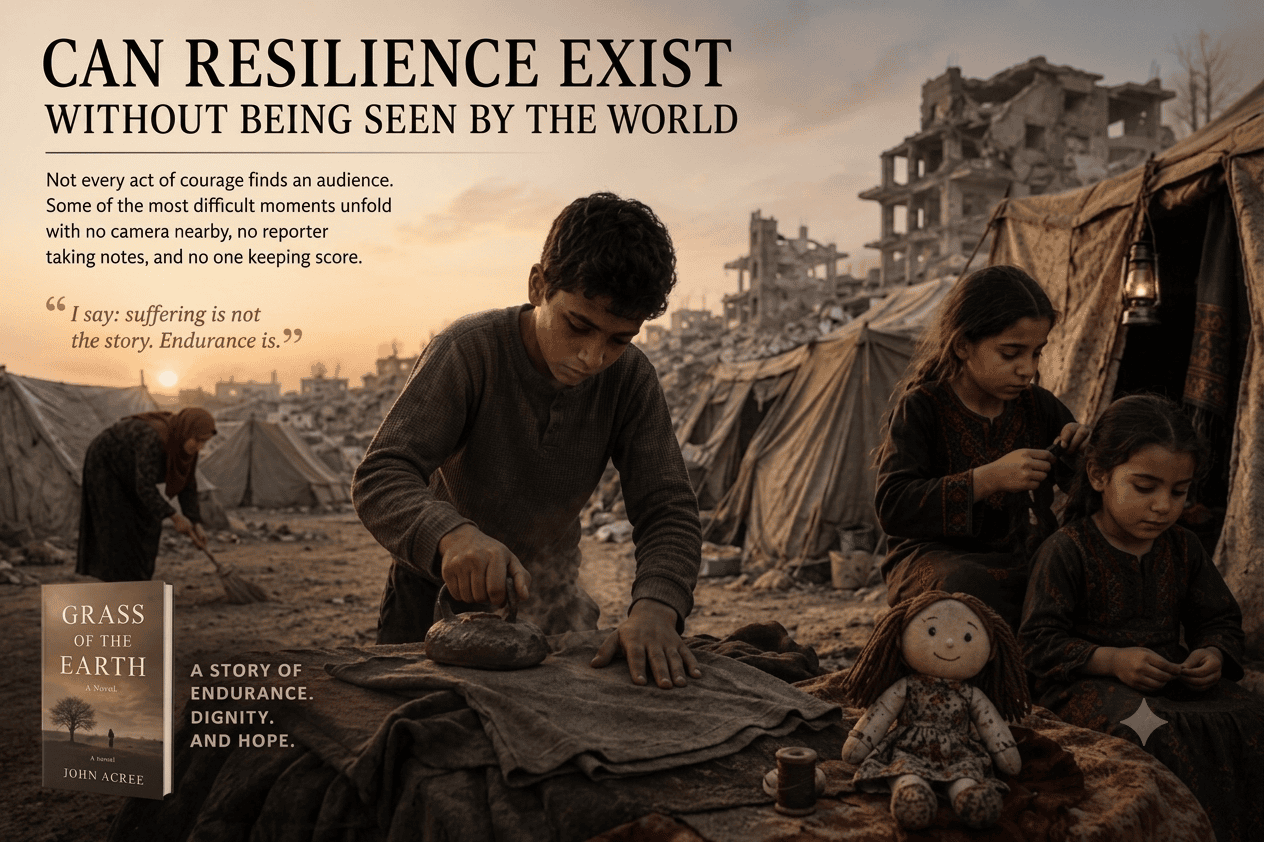
Grass of the Earth by John Acree turns attention toward that quieter kind of strength. Through the experiences of Omar and his family in Gaza, the book asks whether resilience needs to be witnessed in order to matter, or whether it exists just as fully in the moments no one ever records.
Small Acts That Never Reach a Headline
Some of the most striking moments in Grass of the Earth are not the ones involving danger or loss. They are the small, deliberate choices people make to keep going anyway. Ironing a shirt with a heated stone. Sweeping the dirt outside a tent each morning. Braiding a sister’s hair before there is even water to wash it. Stitching a doll from scraps of fabric so a child has something to hold.
None of these moments are dramatic enough for a news segment. No one is filming them. Yet the book treats them as something closer to resistance than routine, small refusals to let hardship erase a sense of self. They are acts of dignity performed for no one but the people doing them.
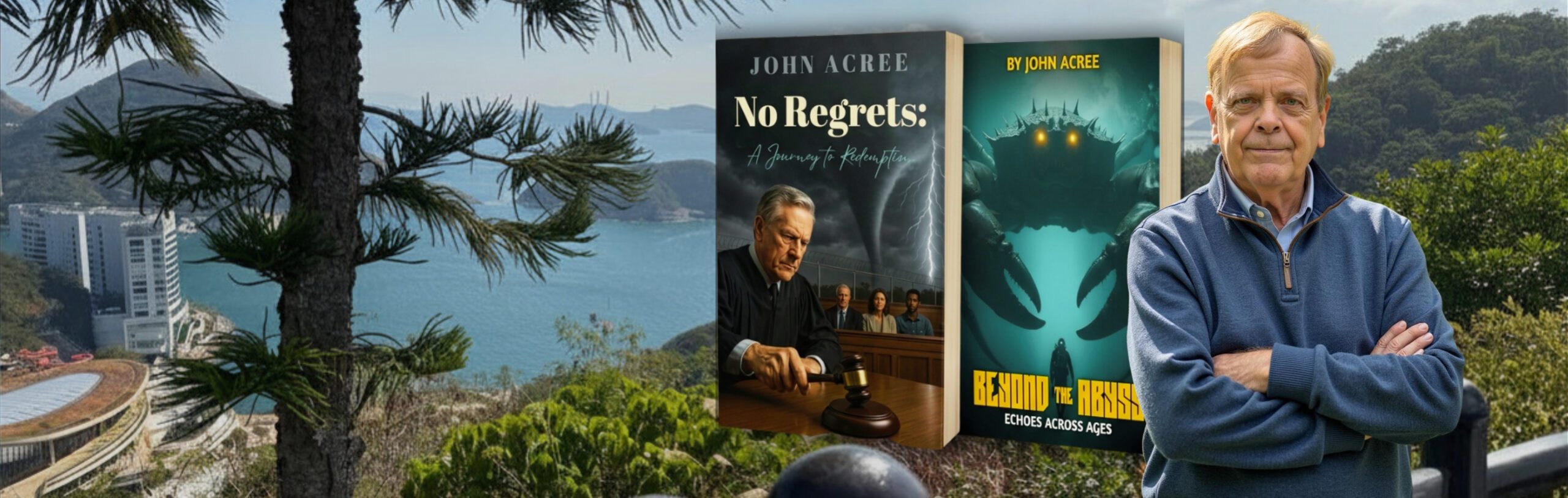
John Acree is an award-winning novelist, veteran journalist, and world traveler whose writing bridges suspense, historical truth, and deep spiritual questions.
Endurance Does Not Need an Audience
At one point in the book, Omar reflects on why people keep holding onto faith and daily routine even when suffering feels endless. Some around him wonder whether pain only means something once the world takes notice of it. Omar reaches a different conclusion: “I say: suffering is not the story. Endurance is.”
That line reframes the entire question. Resilience, in his telling, does not require validation. It does not wait for a witness before it becomes real. It exists in the decision to keep going, whether or not anyone else ever learns that it happened.
When the World Looks Away
Outside attention tends to rise and fall. Coverage of a crisis can dominate headlines for a period of time, then fade as new stories take its place. Grass of the Earth does not ignore this reality, but it also does not treat it as the deciding factor in whether people keep going.
The families in the book do not pause their survival while waiting to be noticed. They continue caring for one another, preserving small routines, and holding onto memory, regardless of whether a camera or a headline happens to be present. Their endurance stays constant. The world’s attention does not.

A Different Way to Measure Strength
If you are drawn to stories that look past the headlines and into quieter forms of human endurance, Grass of the Earth by John Acree offers a grounded and honest perspective. Through Omar and the people around him, the book explores what it means to keep going without an audience, without recognition, and without any guarantee that anyone outside the crisis will ever know what was endured.
Conclusion
Resilience does not ask for permission to exist, and it does not need a witness to be genuine. The strength found in Grass of the Earth often unfolds far from any spotlight, in gestures too small for a headline and moments no one thought to record. Perhaps that is where resilience is truest, not in the version performed for the world, but in the quiet decision to keep going when no one is watching at all